Tier 1 · Market Terminal
Read Nexus and paper-test ideas.
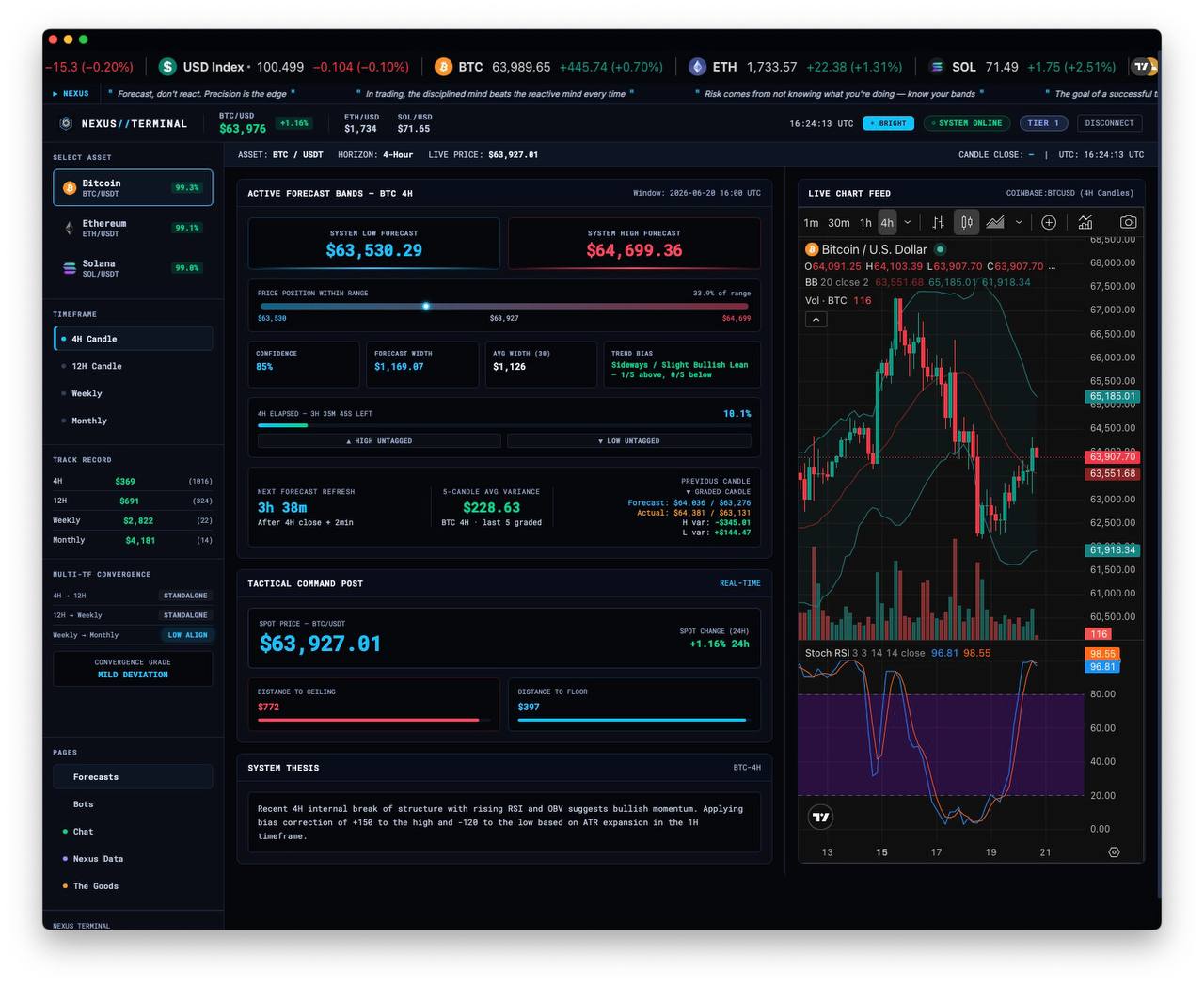
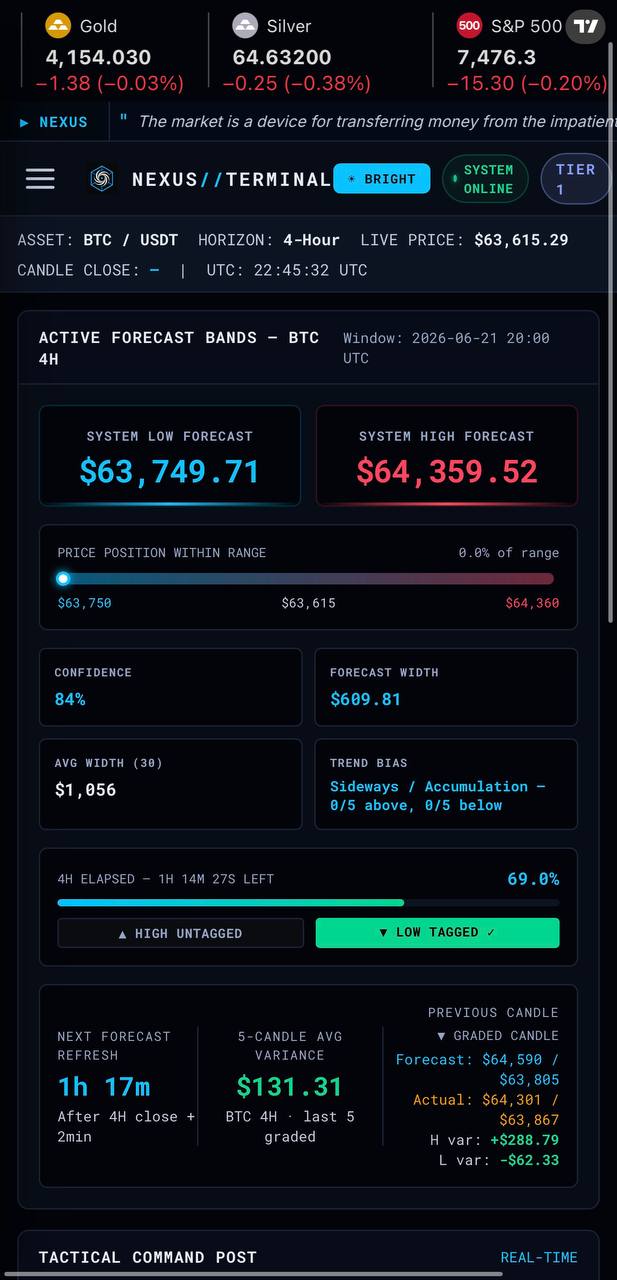
Tier 1 is the hosted Nexus environment: live forecast bands, the evidence ledger, alerts, Wire, Community, and Paper Bot Lab access. It is the cleanest way to understand the system before adding API or live-control infrastructure.
Forecast deckEvery supported market across 4H, 12H, Weekly, and Monthly horizons.
Evidence layerRolling MAE, graded history, forecast lookup, and receipts.
Paper Bot LabPaper-only testing tied to Nexus bands. No exchange keys. No real funds.
Terminal workflowWire, alerts, Community, charts, and subscriber education in one login.
Choose Tier 1
Best for users who want to consume and test the Nexus signal.
TerminalForecast dashboard
Live bands, thesis, confidence, candle progress, and chart context.
EvidenceTrack record + MAE
Forecasts graded against actual candle highs and lows.
Paper LabPaper-only bot testing
Rules tested against Nexus output without touching an exchange.